
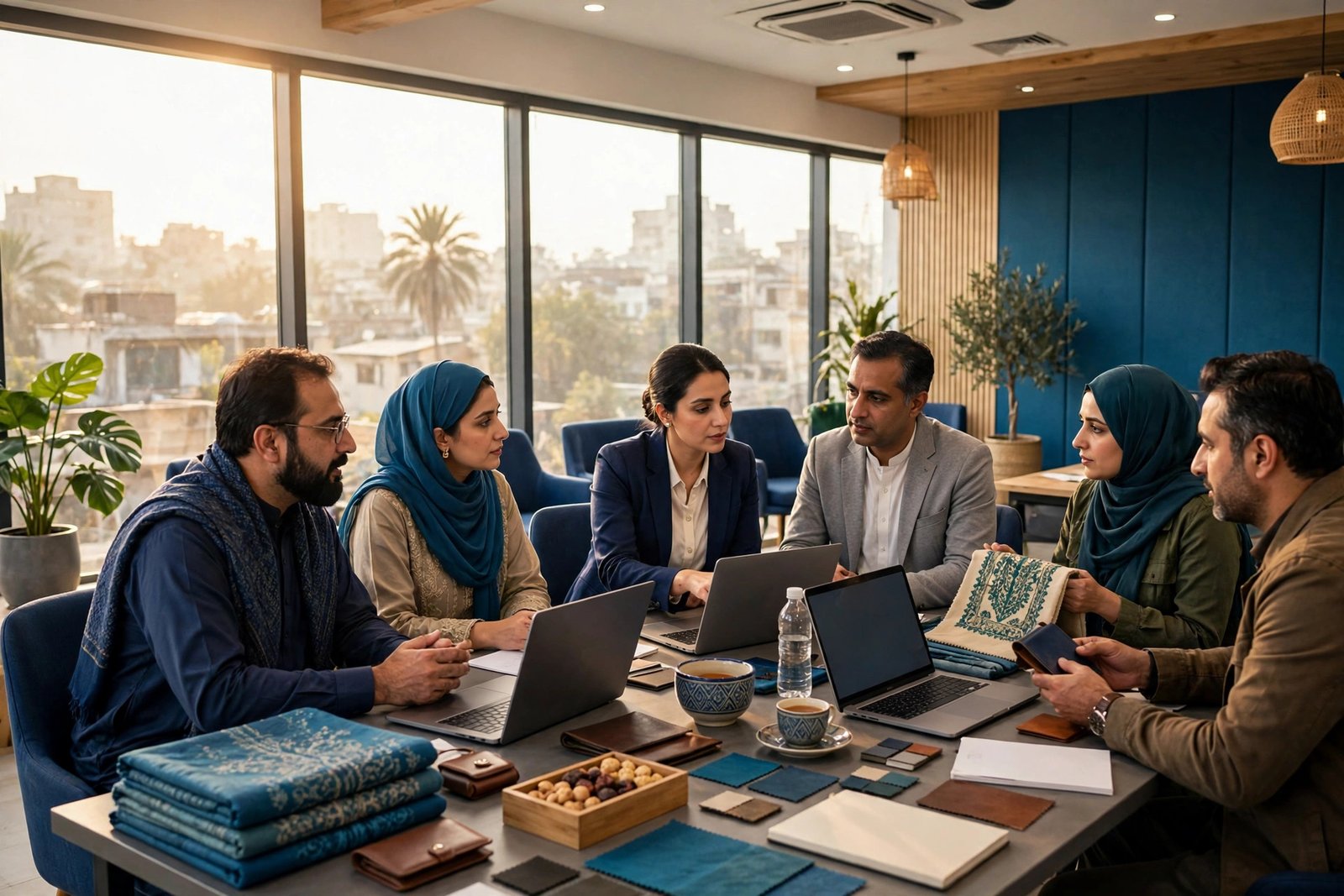
Small businesses in Peshawar, Lahore, Karachi and Quetta are about to get a dedicated government help desk — and Rs300 billion in export finance reserved just for them. Prime Minister Shehbaz Sharif approved district-level SME facilitation centres on Monday 16 November 2026, with pilot centres in the four cities and a rollout to every district if the pilots work.
1What Was Announced
According to The Express Tribune (reporting the Associated Press of Pakistan), the prime minister approved the establishment of SME facilitation centres at the district level during a meeting with a delegation of SME exporters in Islamabad on Monday. The pilot projects will launch in Lahore, Peshawar, Karachi and Quetta, and — in the prime minister’s words — once they are successfully implemented, the centres “will gradually be established in all districts to provide maximum awareness and guidance to citizens interested in setting up businesses.”
The same meeting produced three more decisions worth noting:
- TDAP and SMEDA will be modernised and restructured. The prime minister approved the modernisation and restructuring of the Trade Development Authority of Pakistan (TDAP) and the Small and Medium Enterprises Development Authority (SMEDA), to promote Pakistani exports and align local industries with international export standards.
- A cold storage plan is coming. The relevant authorities were directed to present, at the earliest, a comprehensive plan for a sustainable cold storage system to facilitate the export of perishable goods — a long-standing complaint of food and agriculture exporters.
- A committee will review the exporters’ proposals. The prime minister constituted a committee to review the practical and actionable proposals put forward by the SME delegation, which will submit a report to him on implementation.
The prime minister described small and medium-sized enterprises as “the backbone of any country’s economy” and said providing facilities to increase exports by SMEs was among the government’s top priorities.
2The Rs300 Billion in Export Finance
The headline number is Rs300 billion, allocated under the Export Finance Scheme for the SME sector and new exporters. The prime minister was explicit that the amount “will be exclusively reserved for small and medium-sized enterprises” — and that the Export-Import Bank of Pakistan (EXIM Bank) has already issued a circular in this regard.
That exclusivity matters. Export finance in Pakistan has historically flowed to large, established exporters with banking relationships and collateral, while the small firms that most need working capital to fulfil an export order have often been locked out. Ring-fencing Rs300 billion for SMEs and first-time exporters is designed to change that, at least on paper.
The financing is short-term working capital: money to buy raw material, produce an order and ship it, repaid when the buyer pays. According to economic analyst Ateeq ur Rehman, quoted in The Financial Daily, EXIM Bank’s export finance carries a 6% end-user rate against a 12% policy rate — a meaningful discount for a small business. The same report says the government aims to nearly double SME financing to Rs2 trillion and raise the number of SME borrowers to 775,000 by June 2028.
Those targets are ambitions, not guarantees. What is concrete today is the allocation and the EXIM Bank circular. The test will be whether a small exporter in Peshawar or Quetta can actually walk into a bank and access it.
3The SME Connect Portal
There is already one working piece of this puzzle. The State Bank of Pakistan launched the SME Connect Portal on 1 November 2026 — a central platform where small businesses can register their profiles, submit their financing requirements and track the status of their requests. Finance Minister Muhammad Aurangzeb chaired a meeting on 16 November to review progress on the portal and on export financing for SME exporters.
4What This Means for Pakistani Businesses
This story matters to the readers of this blog for a simple reason: most of them are SMEs — and Peshawar, our home city, is one of the four pilot cities.
The access problem is real, and the centres are aimed at it. The biggest barrier for a small Pakistani business is rarely the lack of a scheme — it is not knowing the scheme exists, not knowing which office to visit, and not having the paperwork in order. A district-level centre that explains, in one place, how to register, how to apply for finance and how to meet export standards would close that gap — if it is staffed by people who can actually answer questions, rather than hand out brochures.
Reserved finance only helps if banks lend it. The Rs300 billion is earmarked exclusively for SMEs, but banks still apply their own credit checks and collateral requirements. The Financial Daily’s reporting notes that collateral requirements remain a problem for SMEs even as the SBP, SMEDA and TDAP have created concessions. Small exporters should treat the announcement as an opening to ask their bank about the Export Finance Scheme by name — and to use the SME Connect Portal to make the request formally, rather than waiting for the bank to offer it.
E-commerce exporters get a second tailwind. The SME announcement lands days after another useful development: on Friday 13 November, Pakistan Single Window (PSW) and Alibaba.com signed an agreement for a digital Trade Data Confirmation Service, which lets Alibaba.com independently verify Pakistani suppliers’ export declarations through PSW’s national trade infrastructure. For a small manufacturer or trader selling on a global B2B marketplace, that kind of institutional verification is what turns a first enquiry from a foreign buyer into an order. (If you are thinking of selling abroad, our guide to starting an online store in Pakistan covers the setup; our e-commerce website cost guide covers what it costs to build one.)
Perishable-goods exporters should watch the cold storage plan. The directive for a sustainable cold storage system is the least detailed part of the announcement, but it addresses a real bottleneck: fruit, vegetable and meat exporters lose orders because the cold chain breaks between farm and port.
5What Your Business Should Do Now
Announcements do not export anything. These steps turn this one into something useful:
- Register on the SME Connect Portal. The portal has been live since 1 November. Create your business profile, submit your financing requirements and keep the tracking reference. It costs nothing and puts your request on record.
- Ask your bank about the Export Finance Scheme by name. Mention the Rs300 billion SME allocation and the EXIM Bank circular, and ask what documents they need for a short-term export finance facility. If your bank cannot answer, try another bank.
- Get your export paperwork in order. Registration, tax records and a clear record of past orders are what banks and facilitation centres will ask for first. If you sell online, make sure your store, product listings and payment setup are presentable.
- Watch for your city’s centre opening. If you are based in Peshawar, Lahore, Karachi or Quetta, the pilot centre in your city is the place to visit first when it opens — in person, with your documents in hand.
- Do not pay anyone to “fast-track” your application. Government facilitation centres exist to give guidance; no middleman can speed up a bank’s credit decision. Anyone charging a fee to access the scheme should be treated with suspicion.
6The Bigger Picture
Pakistan’s economy has one growth story that keeps delivering: IT and services exports hit a record $4.6 billion in FY2025-26, and the government has set a $10 billion ICT export target by FY2028-29. SMEs are where that growth actually happens — in small software houses, online stores, workshops and trading firms across the country, not in boardrooms.
The SME facilitation centres and the Rs300 billion allocation are the government betting on that reality. The idea is sound: bring the help to the district, reserve the money for the small firms, and give them a portal to apply through. The execution is the test — whether the pilot centres open quickly, whether banks actually lend the reserved finance, and whether the TDAP and SMEDA restructuring changes anything a small exporter can feel. The businesses that benefit from government support are usually the ones that show up first with their paperwork ready.
Source: The Express Tribune (APP), “PM approves establishment of SME facilitation centers at district level to boost exports”, 16 November 2026. Corroborated by ARY News, Pakistan Today and Mettis Global, 16 November 2026. PSW–Alibaba.com agreement: Business Recorder, 13 November 2026.

Get Your Business Ready to Export
Whether the opportunity is a facilitation centre, an export finance scheme or a new marketplace, the businesses that win are the ones that are ready — with a professional website, a store that takes orders, and a Google presence customers trust.