
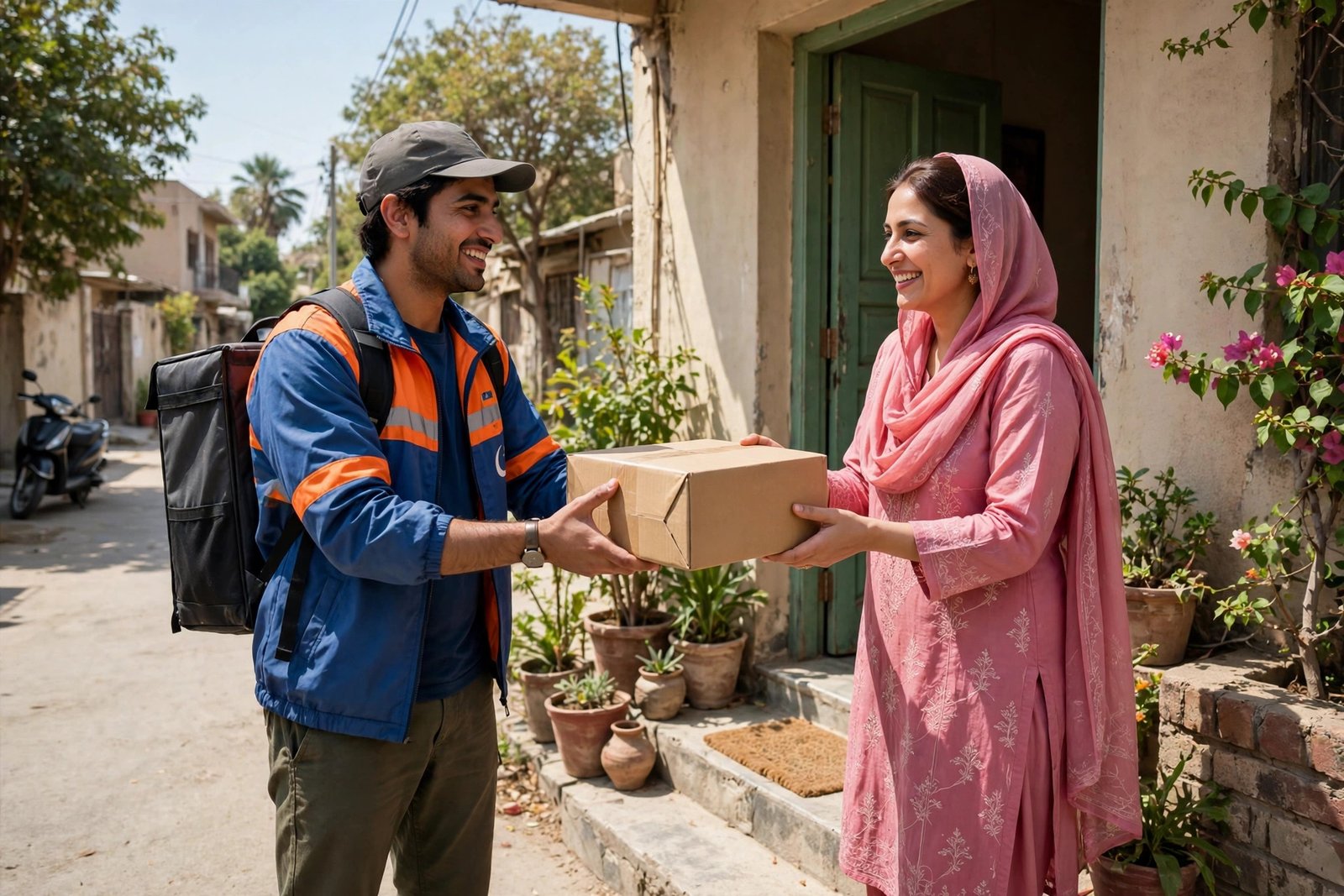
Cash on delivery is still how most Pakistanis pay for online orders. It is also the reason so many of those orders come back. If you want to reduce COD returns in Pakistan, the fix is rarely a better courier — it is a better process before and during delivery: confirm properly, prove the parcel is real, stay in touch on delivery day, filter out the orders that were never serious, and remove the fear that makes people say no at the door.
Why COD Orders Get Returned
Most returns fall into five buckets, and each of the methods below fixes one of them:
- No real commitment. The order was placed casually — a tap on an ad, a half-hearted “ok” on a call — and by delivery day the customer has forgotten or changed their mind.
- No contact. The rider cannot reach the customer, or the customer never knew the parcel was coming that day, so the rider marks it “customer not available”.
- Wrong or incomplete address. A neighbourhood name with no street or house number sends the rider in circles until the delivery fails.
- Fear of the product. The customer worries the item will be damaged, wrong, or not what they saw in the ad, so refusing feels safer than paying.
- Not a serious buyer. Some orders were never going to be accepted. The buyer was testing the process, or ordered from three stores and kept the first one that arrived.
You cannot remove COD from a Pakistani store — customers expect it. But you can remove most of the reasons behind the returns.
1Confirm with a WhatsApp Voice Note, Not a Robotic Call
Automated IVR calls are the weakest confirmation in the business. The customer hears a recording, presses 1 without thinking, and feels no commitment at all. Two days later, when the rider arrives, the order is already forgotten.
Send a short, polite WhatsApp voice note from your customer support instead. Mention the customer’s name, repeat the order details and the full address, and ask them to confirm. A human voice changes the psychology completely: the customer feels a real person is preparing their parcel, and saying yes to a person carries far more weight than pressing a button for a machine. And if the customer has changed their mind, they will usually say so right there on WhatsApp — which saves you the cost of shipping a parcel that was never going to be accepted.
How to do it well
- Keep it under 30 seconds: name, product, quantity, total amount, and address.
- Record it in a warm, unhurried tone. A rushed recording sounds like a robot anyway.
- Send it within a few hours of the order, while the purchase is still fresh in the customer’s mind.
- If there is no reply, follow up once with a text message. If there is still no reply after 24 hours, hold the shipment — a silent customer is the most likely return.
- Use a consistent sender: the same WhatsApp Business number every time, with your store name and logo, so customers recognise you instantly.
This one change alone filters out the largest group of returns — the orders that were never real.
2Send a Packing Video Before Dispatch
The moment a parcel is packed, send the customer a 5-second video or photo on WhatsApp: the packed parcel with the flyer and the address slip clearly visible. Add one line with it: “Your parcel is packed and being handed over to the courier. Please keep the total amount ready so delivery is smooth.”
This works for a simple psychological reason. Until the customer sees proof, the order is an abstract promise that is easy to cancel. Once they have seen their parcel — their name on the slip, the box sealed and ready — the order becomes real. Cancelling now feels like breaking an arrangement, not ignoring an ad. Most customers will also show the video to family members, which quietly turns one buyer into several people expecting the delivery.
How to do it well
- Film it in one take at the packing table — no editing, no music, no filters. Authenticity is the point.
- Make sure the address slip is readable in the frame. That is what proves the parcel is theirs.
- Send it the same day the parcel is packed, before the courier picks it up.
- Keep the message short and include the total amount again, so there is no surprise about cash at the door.
- Save the video for a few days. If a dispute arises later about what was shipped, it is your evidence.
3Alert the Customer the Moment It Is “Out for Delivery”
A large share of returns in Pakistan happens because of a failed handover, not a refused one. The rider arrives, cannot find the house, cannot reach the customer, or is running late — and updates the status to “customer not available”. The parcel starts its journey back, and you pay for it.
Watch your courier portal, and the moment the status changes to “Out for Delivery”, message the customer in the morning: their parcel will arrive today, and if the rider cannot find the location or cannot get through, they should contact your helpline immediately instead of waiting. This single message keeps both sides alert. The customer keeps their phone nearby and the cash ready. The rider, knowing the customer is expecting the delivery and has a helpline to call, is less likely to mark a failed attempt without trying.
How to do it well
- Send the alert early in the day, not when the rider is already at the door.
- Include the rider’s expected window if the courier shows one, and your helpline number.
- Tell the customer exactly what to do if the rider calls from an unknown number — many people ignore unknown calls, which is how “not available” happens.
- If the courier portal shows a delay, tell the customer before they start wondering. A customer who is informed waits; a customer who is ignored cancels.
- Check the portal again in the evening. If the status is still undelivered, call the customer yourself that night instead of discovering the return three days later.
4Take a Small Advance on Incomplete Addresses
Some orders carry an address that is barely an address: a neighbourhood or village name, no street, no house number. Shipping a full COD order to that address is a gamble — if the rider cannot find the house, you lose the delivery charges in both directions.
For these orders only, ask the customer to pay just the delivery charges in advance — typically PKR 200 or 250 — through Easypaisa or JazzCash, before you dispatch. A serious buyer pays a small advance without hesitation; it is a trivial amount against the order. A non-serious buyer disappears at this step, and that is exactly the point: the orders you filter out here are the ones that would have come back as returns. You save the double shipping cost, the packing, and the days of stock in transit.
How to do it well
- Apply this only to incomplete addresses. Asking every customer for an advance will cost you genuine orders.
- Be upfront about why: “Your address does not have a street or house number, so we take the delivery charges in advance to confirm the order.” Customers understand this.
- Accept Easypaisa and JazzCash — the wallets your customers already use. Do not ask for a bank transfer for PKR 200.
- Confirm receipt immediately on WhatsApp and dispatch the same day. The advance must feel like speed, not friction.
- If the customer refuses, cancel politely and move on. You have just avoided a return, not lost a sale.
Asking every customer for an advance will cost you genuine orders. Use this filter only where the address cannot guide a rider to the door.
If you are unsure which payment methods to offer for advances, our guide to payment gateways in Pakistan covers JazzCash, Easypaisa and the other options in detail.
5Reassure with Post-Delivery Support Before Delivery
Many customers refuse the parcel at the door because of fear, not because they changed their mind. They worry the product will be damaged, the wrong size, or nothing like the pictures. Refusing feels safer than paying for something they cannot return.
Remove that fear before delivery day. Tell the customer clearly that your store has 24-hour customer support and an easy replacement policy: they can receive the parcel with full confidence, and if there is any problem — a technical fault, a wrong item, a size issue — the company takes responsibility. When the risk is gone, the hesitation goes with it. Customers who know they are protected accept parcels; customers who feel alone with the risk do not.
How to do it well
- Put the replacement promise in writing on WhatsApp before dispatch, not just on your website. The customer needs to see it where they already are.
- Keep the promise simple and specific: what is covered, for how long, and how to claim it. Vague assurances do not reassure anyone.
- Answer support messages fast on delivery day. A customer who messages “the rider is here, is this the right product?” and gets a reply in two minutes will pay. One who waits an hour will not.
- Honour the policy every single time. One refused replacement will cost you more in bad reviews than a hundred returns.
Trust is the real product here. The parcel is just the delivery mechanism.
The 5 Methods at a Glance
| Method | The return it prevents | Effort to start |
|---|---|---|
| WhatsApp voice-note confirmation | Casual orders, changed minds | Low — one recording per order |
| Packing video before dispatch | Cancellations after shipping | Low — 5 seconds at the packing table |
| “Out for Delivery” alert | Rider marked “not available” | Low — one message per order |
| Small advance on incomplete addresses | Undeliverable addresses, non-serious buyers | Low — Easypaisa/JazzCash only |
| Post-delivery support reassurance | Fear of wrong or damaged product | Low — a written promise, honoured always |
Start with the voice-note confirmation and the packing video — they take minutes per order and remove the biggest share of returns. Add the delivery-day alert next, then the advance rule for incomplete addresses. The support promise should be in place from day one, because it costs nothing and protects every order.
FAQs
Is it fair to ask customers for an advance on a COD order?
Yes, when it is limited to incomplete addresses and limited to the delivery charges. You are not asking for the product price — only the cost of getting the parcel to them. Serious buyers understand this, and it protects both sides: you do not ship blind, and the customer gets a confirmed, prioritised order.
What if a customer does not reply to the WhatsApp voice note?
Follow up once with a text message. If there is still no reply after 24 hours, hold the shipment. Silence is the strongest predictor of a return — shipping anyway means paying to discover what you already suspected.
How much advance should I ask for?
Only the delivery charges — usually PKR 200 to 250. The amount must be small enough that a genuine buyer pays it without thinking, and large enough that a casual order is not worth placing. Never ask for the full product price in advance on a COD order; that defeats the purpose of cash on delivery.
Do these methods work for Facebook and WhatsApp sellers, not just websites?
They work even better. Social sellers already talk to customers on WhatsApp, so the voice note, the packing video and the delivery alert fit naturally into the conversation. If you are just starting out, our guide on how to start an online store in Pakistan covers the setup, and our ecommerce website cost guide shows what a proper store costs.
What is a normal COD return rate in Pakistan?
There is no single normal number — it varies by product, price and traffic source. What matters is the direction: if your returns are falling month over month after you apply these five methods, the process is working. Track returns per hundred orders, not per day, so one bad week does not mislead you.
Want a Store That Handles Orders Properly?
COD returns are not a courier problem — they are a communication problem. A customer who has heard a human voice, seen their parcel packed, knows it is arriving today, has a small stake in the order, and trusts your support will almost always accept the delivery.
If you need help setting up a store with proper order confirmation, payment options and delivery flows built in, talk to us.