
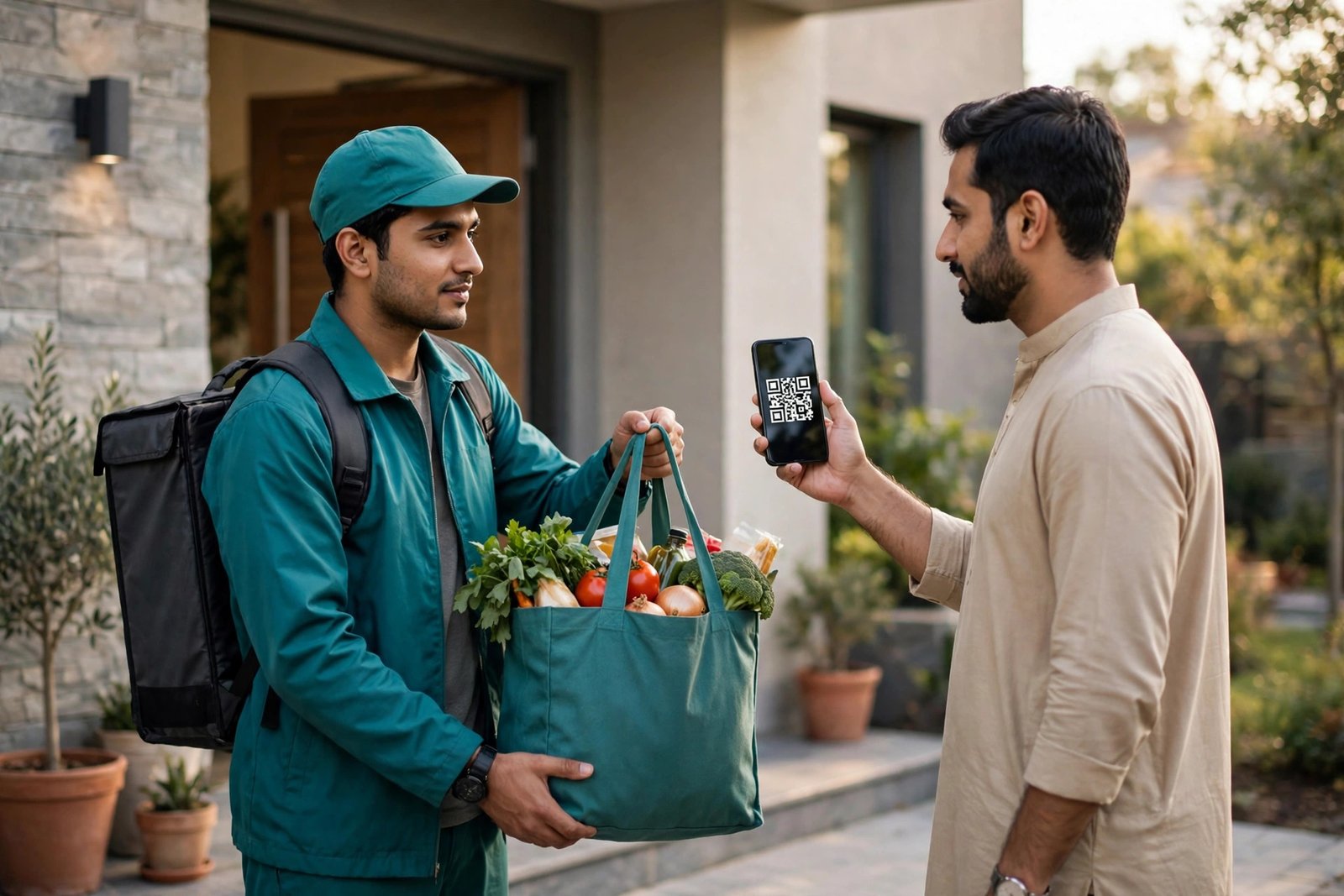
foodpanda plans to introduce Raast QR payments at the doorstep by 2027, according to Business Recorder on 23 November 2026. When a rider arrives with your order, they will generate a Raast QR code on the spot. You scan it with your bank or wallet app, and the money moves instantly from your account to foodpanda’s — no cash changes hands, and nothing is paid until the food or groceries are in your hands.
It is a small change in how you pay, but it targets the one place in Pakistan’s digital payments story where cash still refuses to die: the doorstep.
1What foodpanda Announced
foodpanda, Pakistan’s leading food delivery and quick-commerce platform, says around 50 percent of its orders are now paid digitally. When the company launched in Pakistan in 2016, digital payments accounted for just two to three percent of its orders, with almost everything settled in cash. Ten years on, it is roughly halfway to a cashless order book.
The remaining half is the hard part. Many Pakistani shoppers prefer to pay only after their order arrives — they want the reassurance of seeing the food or groceries before parting with money. The Raast QR plan is designed to keep that reassurance while removing the cash. The rider generates the code at the door, the customer scans it, and the payment completes as an instant account-to-account transfer.
foodpanda has already tried the same method in two other markets, the Philippines and Malaysia, according to Business Recorder. The company has not given a launch month, a list of banks or wallets, or a decision on whether cash will remain an option — so for now, the plan is a commitment with a 2027 deadline, not a dated launch.
2The Numbers Behind the Shift
The announcement lands on top of a payments system that has already gone mostly digital. The State Bank of Pakistan’s annual report on payment systems for FY26, cited by Business Recorder, shows that digital channels carried 92 percent of retail payments, up from 88 percent a year earlier. Of 14.3 billion retail transactions processed through banks and wallets, 13.2 billion were digital.
| Indicator | Figure (FY26) |
|---|---|
| Digital share of retail payments | 92% (up from 88%) |
| Retail transactions via banks and wallets | 14.3 billion, of which 13.2 billion digital |
| Mobile app-based payments | 11.1 billion transactions, up 79% |
| Branchless banking app users | 99.1 million |
| Bank app users | 30.4 million |
| Raast transactions | 2.76 billion, worth Rs80.05 trillion (more than double 1.28 billion a year earlier) |
| Person-to-merchant Raast payments, Apr–Jun 2026 | 86 million (up from 55.9 million the previous quarter) |
| Physical point-of-sale terminals | 337,791 across 295,367 merchant locations |
| Daily card payments | Nearly 1.5 million (up from 1.0 million a year earlier) |
Raast, the State Bank’s instant payment system, is the rail that makes the doorstep idea workable. It processed roughly 2.76 billion transactions worth Rs80.05 trillion in FY26 — more than double the 1.28 billion recorded a year earlier. Person-to-merchant payments, the exact category a doorstep QR code falls into, climbed to 86 million in April–June 2026, up from 55.9 million in the preceding quarter.
The shift is heavily demographic. Up to 80 percent of foodpanda’s users are aged 18 to 35, a segment the company says is significantly more inclined to pay digitally because it prioritises speed and friction-free checkouts over handling cash. Digital wallets and bank cards are the fastest-growing payment channels on the platform.
There is also a commercial reason to chase the cash half. According to foodpanda, industry trends show that digital payers order about 2.2 times as frequently as cash-on-delivery customers and spend roughly twice as much. The company declined to disclose user retention figures, year-on-year digital payment growth, and the exact split between cards and wallets, citing corporate policy — so treat those two multiples as the company’s own reading of industry trends, not audited figures.
3Why the Doorstep Is the Last Cash Frontier
Cash on delivery survives in Pakistan for a reason: trust. A customer who has been burned by a wrong order, a late delivery or a damaged parcel wants to see the goods before paying. Cash is also simple — no app, no OTP, no failed transaction at the gate.
But cash is expensive for everyone in the chain. Riders carry money, which is a security risk and a reconciliation headache. Platforms wait for cash to be deposited before the books close. And for the wider economy, cash at the door is the last gap in a system where 92 percent of retail transactions are already digital.
The Raast QR approach keeps the trust and drops the cost. The customer still pays only after the order arrives. The rider still leaves with the payment settled. The difference is that the money moves account to account in seconds, and there is a digital record of it. A QR code is cheap to generate, needs no card terminal, and works with any bank or wallet app — which is why person-to-merchant Raast payments are the fastest-growing segment of the system.
foodpanda says it has no fixed percentage target for digital payment adoption, and is focusing instead on expanding payment options and working with banks and fintechs to improve transaction success rates. The company frames these efforts as supporting the State Bank’s National Financial Inclusion Strategy 2024–28. Percentage-off and flat-discount promotions with banks and wallet providers serve as initial catalysts to convert cash users, the company says, but cashless checkout habits persist beyond promotional cycles — and it is expanding into loyalty-led propositions and customer rewards.
4What This Means for Pakistani Businesses
For online sellers, COD is your most expensive payment method
Cash on delivery brings fake orders, refused parcels, return shipping costs and cash-handling delays. foodpanda’s move is a signal that the market is ready for pay-after-delivery without cash — and sellers who offer it first will keep the trust advantage of COD while cutting its costs. Our guide to the best payment gateways in Pakistan covers the options worth comparing, and our playbook on reducing cash-on-delivery returns shows how to cut the fake-order problem that makes COD so costly.
For small stores and home-based sellers, Raast QR is already within reach
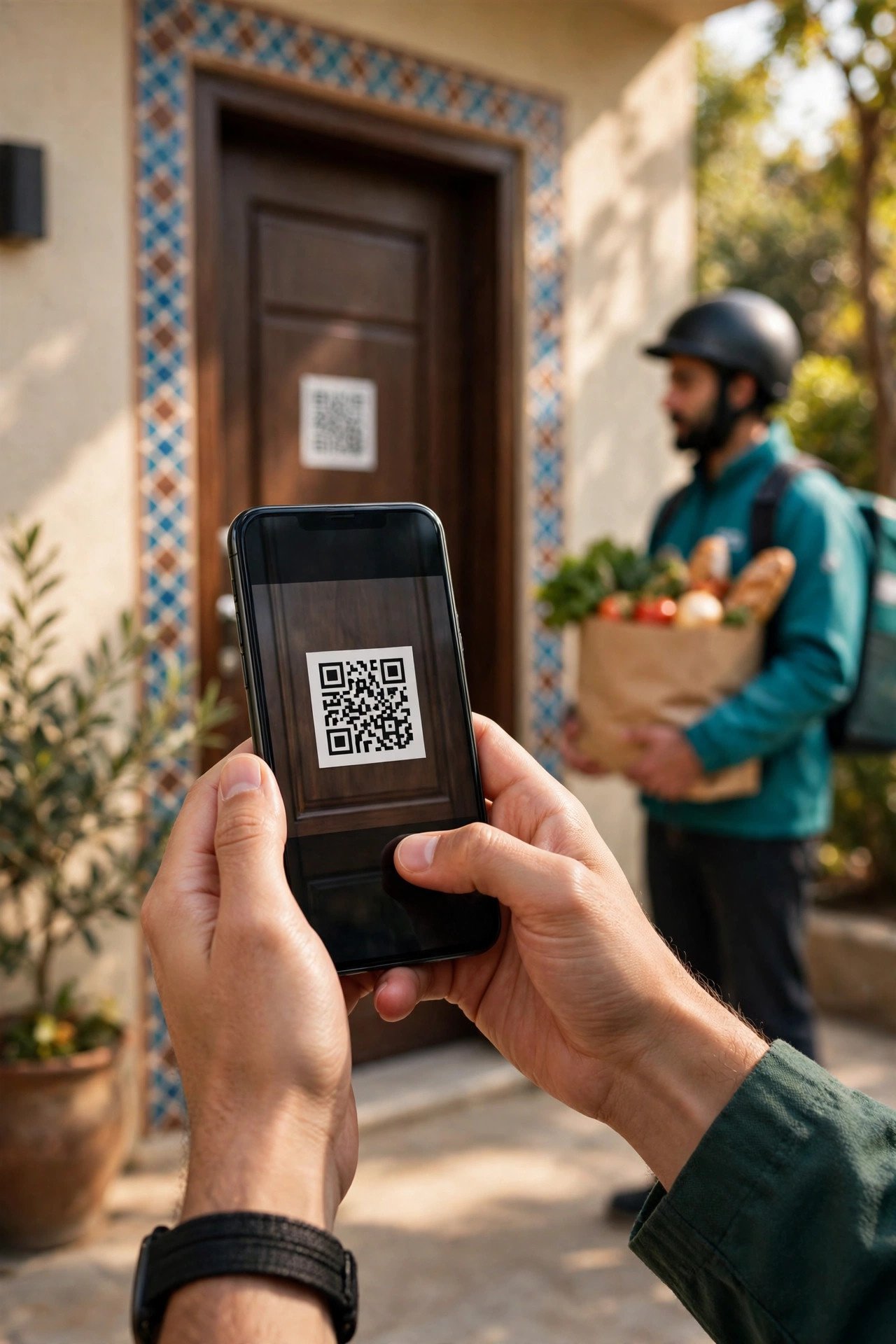
You do not need to wait for foodpanda. Raast person-to-merchant QR codes are available through banks and wallets today, and a rider or courier can carry a printed code or generate one on a phone. If your customers insist on paying at the door, give them a QR option alongside cash — it settles instantly, leaves a record, and costs you nothing in card-terminal fees.
For restaurants and grocery sellers, the 18–35 customer is already digital
Four out of five foodpanda users are under 35, and that segment prefers speed over cash. If your ordering flow still defaults to cash, you are adding friction exactly where your best customers least want it. Make the digital option the default at checkout and keep cash as the fallback, not the other way round.
For agencies and developers, this is a service to sell
Every food, grocery and retail client with delivery operations will need the same thing foodpanda is building: a checkout and delivery flow that accepts Raast QR, bank transfer and wallets at the door. If you build stores for clients, add a “pay at delivery by Raast QR” option to your standard build — it is a small feature with a clear story behind it, and the SBP numbers give you the evidence to sell it.
5What to Watch Next
- The launch detail: which banks and wallets support the doorstep QR at launch, and whether foodpanda keeps cash as an option or phases it out.
- Whether other platforms follow: Daraz, restaurant chains and courier companies all face the same cash-at-the-door problem, and a foodpanda success would give them a proven template.
- The transaction success rate: a QR payment that fails at the gate is worse than cash, so the banks and fintechs foodpanda works with will need to keep failure rates low when the feature goes live.
The honest reading is that nothing changes today. The company has said only that it plans to bring the feature in by 2027. But the direction is unmistakable: Pakistan’s payments are 92 percent digital, Raast volumes have more than doubled in a year, and the country’s biggest delivery platform has now put a date on closing the last cash gap. For online sellers, the time to prepare is now — not when the riders start holding up QR codes.
Source: Business Recorder, 23 November 2026, based on foodpanda statements and the State Bank of Pakistan’s annual payment systems report for FY26; corroborated by TechProlonged, 23 November 2026.
Want Your Store Ready for the Cashless Shift?
Pakistan’s shoppers are going digital — and the stores winning their orders are the ones with smooth, trusted checkout and delivery flows. At Azhad Niaz & Company in Peshawar, we build fast WordPress and Shopify stores with the payment options your customers actually use.